
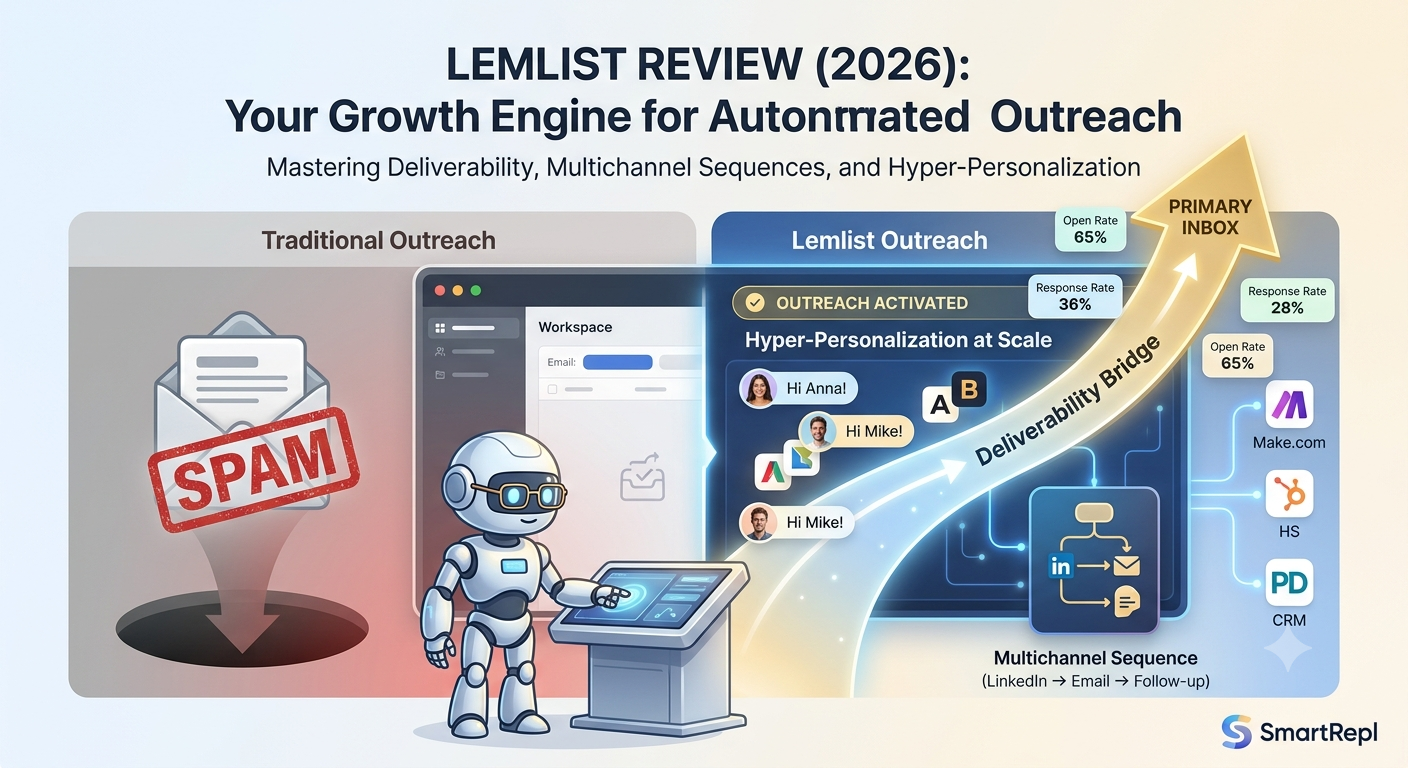
Setting up a successful B2B cold email campaign is more challenging than ever. Mailbox providers like Google and Microsoft are constantly tightening their spam filters. Generic mass emails simply don’t work anymore; deep personalization and technical perfection have become absolute prerequisites to even reach your prospect’s primary inbox.
If you are looking for the ultimate tool to automate your sales outreach, you will undoubtedly run into Lemlist. But does this platform still live up to its reputation? In this comprehensive review, we dive deep into its features, its unique deliverability tools, and how to integrate Lemlist into a modern, automated software infrastructure.
👉 Start building your automated outreach engine with Lemlist today
What is Lemlist?
Lemlist is an advanced cold outreach and sales engagement platform that allows B2B companies, agencies, and growth hackers to run personalized multichannel campaigns. While traditional email marketing tools (like Mailchimp) are designed for newsletters sent to an opt-in list, Lemlist is specifically engineered for 1-on-1 cold acquisition via email, LinkedIn, and phone.
The platform historically distinguishes itself through its powerful personalization options (such as dynamic images and video landing pages) and its built-in focus on deliverability—ensuring your emails actually land in your prospect’s primary inbox instead of the spam folder.
Key Features of Lemlist
1. Advanced Multichannel Sequences
Successful outreach doesn’t stop at email. With Lemlist, you can build complex sequences that combine email with automated LinkedIn actions (such as profile visits, connection requests, and messages) and manual tasks like cold calling. This significantly increases the number of touchpoints with your prospect, leading to substantially higher conversion rates.
2. Lemwarm: The Gold Standard for Email Warmup
One of Lemlist’s biggest selling points is Lemwarm. Before you start sending cold emails from a new domain, you need to warm up the reputation of that email address. Lemwarm completely automates this process by sending and receiving emails in the background to a network of tens of thousands of real inboxes. These emails are automatically marked as “important” and replied to, which sends a rock-solid signal to spam filters.
💡 Operational Tip: Always let a new outreach domain warm up via Lemwarm for at least 3 to 4 weeks before launching your first live campaign. This prevents your domain from being blacklisted immediately.
3. Hyper-Personalization at Scale
People respond to content that feels like it was custom-made for them. Lemlist allows you to automatically insert the prospect’s first name, their company logo, or even a dynamic screenshot of their website into an image or a personalized landing page. This measurably boosts click-through and reply rates.
4. AI-Driven Campaign Builder
With the built-in AI assistant, you can generate complete outreach sequences within seconds based on your target audience and value proposition. The AI not only helps write the copy but also structures the perfect time intervals between different touchpoints.
👉 Test the Lemlist AI Campaign Builder here
Pros and Cons of Lemlist
| Pros | Cons |
|---|---|
| Market leader in deliverability: Excellent tools (Lemwarm) to stay out of the spam box. | Steep learning curve: The interface and correctly configuring multichannel sequences require time. |
| Unique visual personalization: Dynamic images and custom video landing pages. | Pricing: More expensive than basic email tools, especially for larger teams. |
| Seamless CRM integrations: Direct sync with HubSpot, Salesforce, and Pipedrive. | LinkedIn restrictions: You are always bound to LinkedIn’s strict weekly interaction limits. |
Integrating Lemlist into Your Software Infrastructure
At SmartRepl, we always look at the bigger picture: how does a tool fit within your total automated workflow? Lemlist shines when you connect it to external data sources and workflow automation platforms like Make.com.
For example, you can set up a workflow where high-intent leads from a scraping tool (like PhantomBuster or Clay) are automatically enriched, filtered through an AI filtering step, and then pushed directly into a specific Lemlist campaign. The moment a prospect replies positively, a webhook triggers to stop the outreach immediately and log the warm lead into your CRM.
Conclusion: Is Lemlist Worth the Money?
Yes. If B2B lead generation, cold emailing, or multichannel outreach is a core pillar of your growth strategy, Lemlist is one of the best investments you can make. The combination of hyper-personalization, powerful multichannel workflows, and the indispensable deliverability features of Lemwarm makes it an absolute powerhouse within your software infrastructure.
Stop losing leads to the spam folder and put your B2B sales operations on autopilot.
👉 Try Lemlist risk-free and start booking meetings on autopilot