
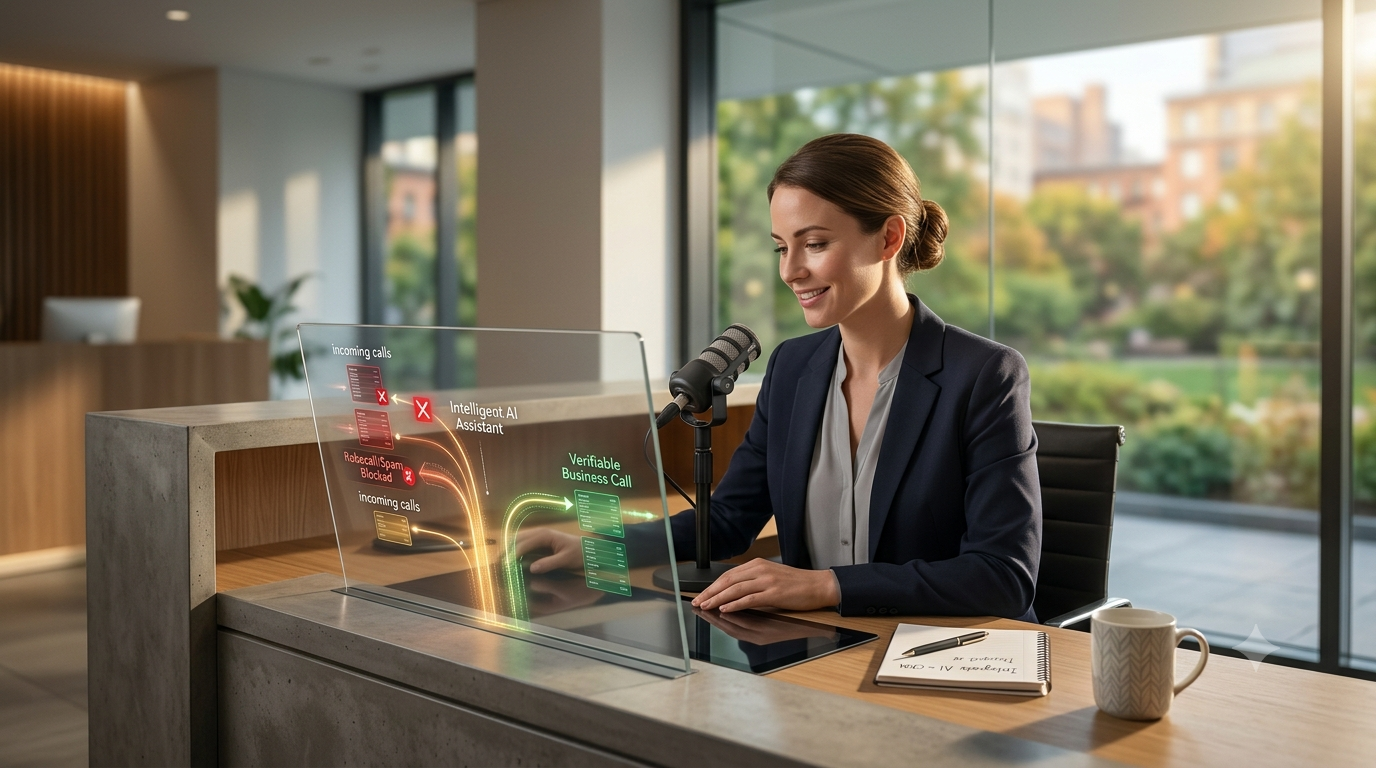
Every small business owner, office manager, and team leader knows the exact frustration: your phone rings, interrupting an important meeting or deep-focus work session. You pick up expecting a prospective client or an urgent operational request, only to hear a synthetic voice selling unauthorized business loans or phishing for company credentials.
In modern business telecommunications, phone spam is no longer just a minor annoyance—it is an active drain on productivity, administrative costs, and corporate security. However, simply blocking unknown callers or aggressively declining unrecognized numbers creates a dangerous operational risk: you might miss out on legitimate high-value sales leads, customer inquiries, or partner contacts.
This comprehensive guide explores why modern robo-calls bypass traditional security barriers, the hidden costs of inadequate phone protection, and how to implement safe, intelligent call screening protocols for your organization.
1. The Anatomy of Modern Business Phone Spam
Understanding why spam calls are so pervasive requires looking at modern VoIP (Voice over IP) infrastructure. Robocallers leverage automated dialers capable of placing thousands of calls per minute for fractions of a cent.
Key tactics used by modern spammers include:
- Neighbor Spoofing: Altering incoming Caller ID numbers to match your local area code and exchange prefix, deceiving employees into thinking a local client is calling.
- Interactive Voice Response (IVR) Scams: Automated scripts asking “Can you hear me?” to capture recorded “Yes” responses for unauthorized billing authorizations.
- Targeted Vishing (Voice Phishing): Impersonating official institutions, banks, or software providers to harvest internal corporate login credentials.
2. Why Aggressive Blocking Harms Business Operations
When business leaders get fed up with phone spam, their initial reaction is often to set phone systems to automatically block all private, anonymous, or unlisted numbers. However, this heavy-handed approach frequently backfires:
- Lost Inbound Sales Leads: High-value prospects calling from private mobile devices or corporate switchboards often get blocked automatically.
- Damaged Brand Reputation: Legitimate callers who receive abrupt disconnects or forced voicemail loops may view your business as unprofessional or inaccessible.
- Operational Friction: Suppliers, contractors, and field employees calling from non-standard numbers cannot reach internal staff during urgent operational events.
No contracts, cancel anytime. Automate your phone protection with intelligent AI call screening.
3. How to Screen Business Phones Safely
Safe phone screening means separating legitimate callers from spam using intelligent automation before the call ever reaches an employee’s handset. Here are the core pillars of an effective call screening architecture:
A. Implement Intelligent AI Call Assistants
Modern cloud call screening platforms deploy conversational AI assistants that pick up incoming calls instantly. The AI greets the caller, requests their name and reason for calling, and evaluates their intent in real time. Legitimate human callers state their business and are transferred cleanly; automated bots and silent spammers are filtered out immediately.
B. Deploy Dynamic Challenge-Response Prompts
A simple press-a-digit challenge (e.g., “Press 3 to connect to our sales desk”) stops 99% of automated robocall dialers instantly, as automated scripts rarely possess the dynamic logic to navigate randomized prompts.
C. Leverage Real-Time STIR/SHAKEN Verification
Modern telecom protocols like STIR/SHAKEN provide digital certificates verifying that an incoming caller ID is authentic and not spoofed. Choosing a phone screening provider that integrates STIR/SHAKEN database checks keeps malicious dialers from ever ringing your desk phones.
4. Comparing Call Screening Methods
| Screening Method | Spam Filtering Efficiency | Impact on Real Callers | Operational Labor Cost |
|---|---|---|---|
| Manual Screening (Staff) | Low (Time Wasted) | High Friction / Delay | High (Wasted Productivity) |
| Hard Number Blocking | Medium | High Risk (Blocks Real Leads) | Low |
| Static Multi-Level IVR | High against Bots | Moderate Friction for Humans | Medium |
| AI Call Screening (HiCira) | Near 100% Protection | Zero Friction / Natural Flow | Low (Automated Cloud Setup) |
5. Implementation Blueprint for Business Phone Security
To roll out safe call screening across your organization without business disruption, follow this four-stage deployment checklist:
- Step 1: Audit Inbound Phone Traffic: Log caller IDs and categorize incoming calls over a 14-day window to establish a baseline of spam volume vs. genuine callers.
- Step 2: Deploy Cloud Screening Layer: Route main business numbers through an intelligent screening service that filters traffic before forwarding clean calls to your desk phones or VoIP system.
- Step 3: Establish VIP Whitelists: Pre-approve key customer numbers, vendor contacts, and executive lines so they bypass screening protocols entirely.
- Step 4: Review Logs Regularly: Monitor call transcripts and screening logs to continuously tune AI prompts and ensure valid inquiries flow smoothly.
Conclusion: Take Control of Your Business Phone Lines
You don’t have to choose between constant spam interruptions and missing critical customer calls. By replacing manual screening or blunt number blocking with smart, automated call screening solutions, your team reclaims focused work hours while maintaining a polished, professional experience for every authentic caller.
No contracts, cancel anytime. Protect your team from spam and robocalls starting right now.
💡 Scale Further: Maximize your operations right now in our definitive guide:
How To Focus On Your Work And Let AI Handle Your Inbound Phone Calls